
Types of Stone Benchtops: Which Is Right for Your Kitchen?
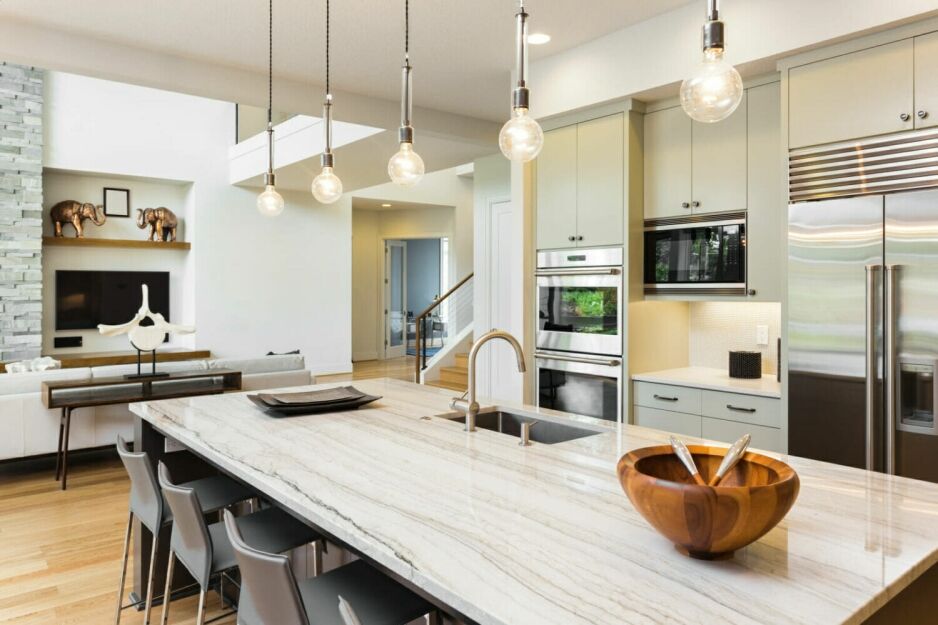
If you’ve already decided you want a stone benchtop, you’re past the hard part, or so it seems. What most Perth homeowners don’t expect is that choosing the right type of stone is a whole other decision, and since July 2024 it’s become a more confusing one. The engineered stone ban changed the market significantly, and I’ve had more conversations at our Guildford showroom in the past 18 months about what’s actually still available than at any point in the past two decades.
In practical terms, today’s stone benchtop types fall into three broad categories: silica-free engineered stone, including Silestone, Vitrum and Zenith; sintered stone, including Dekton and Smartstone Sintered; and natural stone, including granite and quartzite. At Ross’s, these custom stone options are available through the showroom as part of a full kitchen package. This guide covers the key options across the criteria that matter, including durability, maintenance, heat and UV performance, and cost, so you can make the right call for your situation.
If you’re still deciding whether stone is the right material for your kitchen at all, our guide, how to choose a kitchen benchtop, covers that broader decision.
The Stone Benchtop Market Has Changed: Here’s Where Things Stand
Stone benchtops fall into two broad categories: natural stone and manufactured stone. Natural stone, being granite and marble, is quarried directly from the earth. Manufactured stone is produced in a factory from compressed minerals, with or without resin binders. Understanding which category a material falls into matters more than it used to, because the July 2024 engineered stone ban significantly changed what’s available in the manufactured category.
The ban, enforced under Safe Work Australia’s engineered stone regulations, targeted products containing 1% or more crystalline silica by weight, which was the threshold at which stonemasons faced serious silicosis risk when cutting slabs. Traditional engineered stone, which was made from 90%+ ground quartz bound with resin, was banned from supply, manufacture, and installation as of 1 July 2024, with imports prohibited as of 1 January 2025. Natural stone was exempt because granite and marble are quarried rather than manufactured with resin binders. What remained in the manufactured category were two distinct materials: silica-free engineered stone (reformulated to fall below the 1% threshold) and sintered stone, which is manufactured by an entirely different process using extreme heat and pressure with no resins, and is classified separately under Australian standards.
So the types of stone benchtops available to Perth homeowners in 2026 are granite and quartzite on the natural stone side, and silica-free engineered stone and sintered stone on the manufactured side. Each material category performs differently, costs differently, and suits a different kind of kitchen.
Within each category, there are several brands available through Ross’s showroom. This guide covers both the material categories and the specific options you can compare in person.
If you’re still deciding whether stone is the right type of benchtop for your kitchen, our guide to Kitchen Benchtop Materials covers that decision in full. Otherwise, here’s how the options compare.
Stone Benchtop Types: What’s Available and How They Compare
Choosing the right stone benchtop comes down to five things: how much maintenance you’re willing to do, how your kitchen is positioned, what design flexibility you need, whether outdoor use is on the cards, and what your budget allows. The comparison table later in this guide makes it easy to scan across all the options, but the sections below are worth reading before you decide.
Silica-Free Engineered Stone Benchtops

Silica-free engineered stone is the manufactured stone category that replaced traditional quartz benchtops after the 2024 ban. It gives Perth homeowners the familiar engineered stone look, with a non-porous surface, no sealing required and a wide design range, but it is formulated to comply with the post-ban crystalline silica requirements. Ross’s offers several silica-free engineered stone options through the showroom as part of a full kitchen package.
Silestone is Cosentino’s engineered stone range and the most recognised silica-free option available. The current range uses HybriQ+ technology, which replaces the traditional quartz base with premium minerals and recycled materials, reducing the crystalline silica content to compliant levels. The QXeron line goes further, with zero crystalline silica and recycled glass as the base material. Both are fully legal and available in Australia.
Performance-wise, Silestone is hard, dense, non-porous, and scratch-resistant. It never needs sealing. The design range is genuinely wide, with realistic marble looks, concrete finishes, and solid colours available, all with a consistent appearance across the slab. That consistency is a feature for most people, though if you want the natural variation of a quarried slab, it won’t give you that. Silestone is backed by a 25-year manufacturer’s warranty, the strongest warranty of any stone option in the Ross’s range.
Vitrum is a WA-owned silica-free glass composite surface and the direct successor to QStone, a well-established WA quartz brand. It contains zero crystalline silica and is distributed in WA through JH Wilberforce in Malaga. For buyers who want a local post-ban surface with the look of engineered stone, Vitrum is a strong in-showroom option. It carries a 10-year warranty and is suited to indoor applications.
Zenith is a Vitrified Compact Surface by Stone Ambassador. It is not porcelain, traditional quartz or glass composite, but a distinct silica-free surface made using a high-temperature vitrification process and up to 89% recycled materials, including recycled glass. It is a useful option for customers who want the closest look and feel to traditional engineered stone in a compliant post-ban material. Zenith carries a 10-year warranty and is suited to indoor and enclosed alfresco applications, not direct outdoor exposure.
Sintered Stone Benchtops
Sintered stone is manufactured by compressing natural minerals under extreme heat, above 1,200 degrees Celsius, and pressure, with no resin binders. The result is a fully vitrified surface with zero porosity and zero crystalline silica. It is classified separately from engineered stone under Australian standards, which is why it was never subject to the ban.
In terms of performance, sintered stone is the highest-spec option available. It is heat-resistant, UV-stable, non-porous, requires no sealing and is the only stone benchtop category in this guide suited to outdoor installation without qualification. That makes it a strong choice for Perth alfresco kitchens and exposed areas. The trade-off is fabrication complexity, as sintered stone is harder to cut than silica-free engineered stone options, which can add to stonemason labour costs.
Two sintered stone options are available through Ross’s showroom as part of a full kitchen package.
Dekton is Cosentino’s ultracompact sintered surface and is a different product to Silestone. It is 100% UV-stable, suitable for indoor and outdoor use, and has exceptional heat resistance, making it a strong option for exposed alfresco kitchens and high-performance projects.
Smartstone Sintered is a sintered stone surface made from natural minerals under extreme heat and pressure. It is 100% UV-stable, zero-porous and suitable for indoor and outdoor use, with matt and suede finishes available across several price tiers.
Granite Benchtops
Granite is a natural igneous rock, quarried in unique slabs, and no two are identical. It’s exempt from the engineered stone ban because it’s naturally occurring, not manufactured with resin binders. Hard, dense, and highly scratch-resistant, granite performs very well in a kitchen once it’s properly sealed.
The sealing requirement is the main practical consideration. Granite benchtops need sealing annually to prevent staining and moisture penetration. The colour range is limited to what nature provides: blacks, greys, whites, browns, and the occasional green or blue. There’s no manufactured consistency, which is the point for buyers who want a genuinely unique slab.
At Ross’s, natural stone is available through the showroom as Sensa by Cosentino, a granite and quartzite range with Cosentino’s proprietary surface protection pre-applied and a 15-year warranty. Each slab is unique, so buyers should view actual slabs rather than making a final decision from small samples alone.
Quartzite Benchtops
Quartzite is a natural metamorphic rock and is worth distinguishing from quartz, which is engineered, and marble, which is softer. Quartzite is significantly harder and less porous than marble, making it more practical for kitchen use while retaining the natural stone variation that buyers choosing real stone are looking for. Like granite, it requires sealing but is more resistant to etching from acidic foods than marble.
At Ross’s, quartzite is available as part of the Sensa by Cosentino range alongside granite, with surface protection pre-applied and a 15-year warranty.
Marble Benchtops
Marble is a metamorphic limestone and the most visually striking natural stone available for a kitchen benchtop. It’s also the softest and most porous of the options, and that gap between appearance and practicality is worth understanding before committing.
Marble etches easily from acids. Lemon juice, vinegar, wine, and most citrus-based foods will mark the surface if left to sit. It requires more frequent sealing than granite and remains vulnerable to staining even when sealed. In a busy family kitchen, that maintenance reality catches some buyers off guard.
In my experience, most people who choose a marble benchtop understand and accept the trade-off within a few months and find their own rhythm with it. But I’ve also met customers who bought marble for a working kitchen and wished they’d chosen differently. The honest advice: if your kitchen is a genuine daily workhorse, go in with clear eyes. If it’s a lower-traffic space, such as a butler’s pantry, an island feature piece, or a second kitchen, marble is harder to argue against aesthetically.
Marble requires a specialist stonemason for sourcing and installation.
How the Stone Benchtop Types Compare
The table below compares all four stone categories across the criteria that matter most for a Perth kitchen.
| Criteria | Silica-Free Eng. Stone | Sintered Stone | Granite / Quartzite | Marble |
| Silica compliance | Compliant | Compliant (never banned) | Natural (exempt) | Natural (exempt) |
| Porosity | Non-porous | Non-porous | Low (sealing req.) | Porous (sealing req.) |
| Sealing required | No | No | Yes, annually | Yes, regularly |
| Heat resistance | Good (trivets rec.) | Excellent | Good | Moderate |
| UV stability | Good, indoor only | Excellent | Good | Good |
| Scratch resistance | Excellent | Excellent | Excellent | Moderate |
| Outdoor use | Indoor only | Yes, fully rated | Indoor (specialist advice) | Indoor only |
| Design variety | Very wide | Wide | Natural variation only | Natural variation only |
| Cost (indicative, installed) | $650-$1,350/m² | $700–$1,500+/m² | $700–$2,000/m² | $800–$2,500+/m² |
| At Ross’s | Yes, Silestone, Vitrum, Zenith (full kitchen package) | Yes, Dekton, Smartstone Sintered (full kitchen package) | Yes, Sensa by Cosentino (full kitchen package) | Specialist supplier / stonemason required |
All costs are indicative. All stone benchtops require stonemason fabrication and installation. Budget for this separately.
Which Stone Benchtop Performs Best in Perth?
Perth’s climate is not average Australian. The combination of extreme summer heat, high UV intensity, hard bore water, and a strong indoor-outdoor living culture means the material that performs well in a Melbourne or Sydney kitchen isn’t always the right answer here.
Heat and UV. Perth kitchens with north-facing windows or large expanses of glass can see benchtop surface temperatures reach 50 degrees Celsius or above in summer. Sintered stone handles this without any degradation. Silica-free engineered stone options perform well under UV and heat, though trivets are still recommended under hot cookware. Granite handles heat well once properly sealed. Marble is the most vulnerable to thermal stress from hot pots placed directly on the surface.
Hard bore water. This one catches Perth homeowners out more than any other factor. Porous surfaces, being granite and marble, need diligent annual sealing because hard bore water leaves mineral deposits that work into any surface gaps over time. I’ve had customers come back to the showroom frustrated by a granite or marble benchtop that had dulled or stained within a couple of years, and in most cases the culprit was bore water on an under-sealed slab, not the stone itself. Silica-free engineered stone and sintered stone are non-porous, so hard water sits on the surface and wipes straight off.
Outdoor kitchens. Perth’s alfresco culture means a lot of homeowners want a benchtop material that can extend outdoors. Only sintered stone is rated for outdoor installation without qualification because it is UV-stable, weatherproof and requires no sealing. Of the sintered options available through Ross’s, both Dekton and Smartstone Sintered are suited to outdoor use. Silica-free engineered stone options, including Silestone, Vitrum and Zenith, are indoor only. Granite and marble are not recommended for outdoor use without specialist advice, and even then the maintenance commitment increases significantly in an exposed position.
If the kitchen catches afternoon sun or has a north-facing aspect, sintered stone or a silica-free engineered stone option are the safer choices over natural stone. For outdoor use, sintered stone is the only material worth specifying.
Stone Benchtop Costs in Perth
Stone benchtops are a meaningful kitchen investment, and the price varies more than most people expect. Slab choice, edge profile, cutouts, waterfall ends, fabrication complexity and stonemason lead times all affect the final figure. The ranges below are indicative for the Perth market. The only way to get an accurate number is to speak with Ross’s kitchen team with your measurements and a clear brief.
| Material | Indicative installed cost (Perth) |
| Silica-free engineered stone (Silestone, Vitrum, Zenith) | Around $650-$1,350 per square metre installed for Silestone. Vitrum and Zenith pricing varies by tier and should be confirmed in-showroom. |
| Sintered stone (Dekton, Smartstone Sintered) | Around $700–$1,500+ per square metre installed. Sintered stone requires specialist fabrication and labour can increase on complex jobs. |
| Granite and quartzite (Sensa and other natural stone) | Around $700–$2,000 per square metre installed. Standard granite can sit toward the lower end; rarer slabs, thicker profiles, waterfall ends and complex cut-outs push the price higher. |
| Marble | Around $800-$2,500+ per square metre installed. Entry-level and premium imported marble are barely comparable products, so pricing varies by origin, veining, rarity and fabrication complexity. |
Beyond the material itself, what drives stone benchtop costs is consistent: slab size and layout complexity, the chosen edge profile, the number of cutouts, whether a waterfall end is included, and stonemason lead times, which in Perth can stretch during busy renovation periods.
Ross’s offers these custom stone benchtop options as part of a full kitchen package. That means the benchtop is selected alongside your cabinets, layout and finishes, while stonemason fabrication and installation are handled through the quoting process. Material, fabrication and installation may appear as separate line items, so compare full installed costs rather than slab price alone.
Design Decisions: Thickness, Waterfall Ends, and Edging
Once the material is chosen, the design decisions that shape the final look come down to three things: slab thickness, edge profile, and whether to include a waterfall end. These choices affect both the finished aesthetic and the overall cost, so they’re worth thinking through before you get to the stonemason.
Slab Thickness
20mm is the standard for Perth kitchens and the most cost-effective option. It suits most layouts and looks clean and contemporary when paired with a square or eased edge profile.
30mm and 40mm slabs look more substantial, particularly on an island bench, but cost more and add structural loading. For most projects, that extra bulk isn’t necessary. A 40mm look can be achieved by laminating a 20mm slab with a matching strip at the edge, which gives the same visual weight at a fraction of the cost of a solid thick slab. It’s worth asking your stonemason about this before committing to a thicker slab specification.
For most Perth kitchens, 20mm is the right call unless the island bench is a genuine focal point of the design.
Waterfall Ends
A waterfall end, where the benchtop material continues down the side of an island or cabinetry to the floor, is one of the most impactful design moves available in a kitchen renovation. With a veined stone like marble or a marble-look silica-free engineered stone, a skilled stonemason can bookmatch the veining so it flows continuously from the horizontal surface down the vertical face. The effect is striking when it’s done well.
It requires additional material and precise fabrication, so it increases both material costs and labour. If budget is a consideration, using a 20mm slab for the waterfall rather than a thicker specification keeps the look without blowing the overall cost out.
Edge Profile and Overhang
Edge profile is a finishing detail that gets less attention than it deserves. The profile you choose affects how the benchtop reads in the room. A square or eased edge sits cleanly in a contemporary kitchen, while a bullnose or bevelled edge suits a more traditional style. Common options include eased, square, bevelled, bullnose, demi-bullnose, and mitred. Contemporary Perth kitchens lean heavily toward eased or square profiles at the moment.
A bench overhang of 250–300mm is the standard for bar stool seating at an island. Any less and it becomes uncomfortable; much more and the structural support requirements change. Your stonemason will advise on what’s achievable for your specific layout.
For help matching your benchtop choice to your cabinetry and overall palette, our kitchen colour schemes and trends guide is a useful next step once the material decision is made.
Frequently Asked Questions
So, Which Stone Benchtop Is Right for Your Kitchen?
For most Perth kitchens, silica-free engineered stone is the starting point: non-porous, no sealing, strong warranties and the widest design range. Sintered stone is the right call if the kitchen is outdoor-facing or exposed to extreme heat. Natural stone suits buyers who want genuine slab variation and are comfortable with the maintenance commitment.
All three categories are available through Ross’s showroom as part of a full kitchen package. Visit us in Guildford to compare options in person, or browse our stone benchtops range to start the conversation.
If a full stone package is outside the budget, our DIY Densified Stone benchtops are a prefabricated stone-look alternative that cuts and fits without a stonemason.
